Aug 21, 2026
IP20 vs IP65 LED Strip: Which One Do You Need for Your Project?
This article will take you to understand the definition of IP rating and typical applications in different environments, helping you make more professional selection judgments in projects.
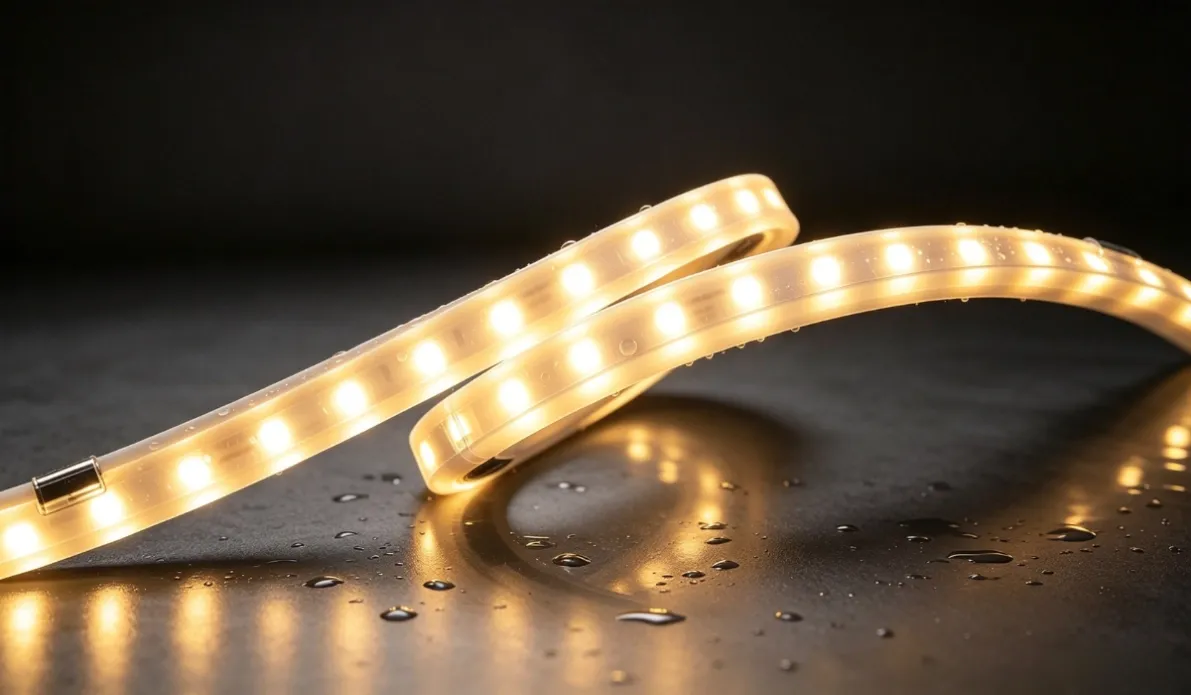
In the process of selecting led strips, we often see labels such as IP65, IP44, IP20, etc. These seemingly simple letters and numbers are related to the lifespan of LED strips. This article will take you to understand the definition of IP rating and the selection logic and typical applications in different environments, helping you make more professional selection judgments in projects.
Contents
1、What is IP rating?
2、IP20 vs IP65 LED Strip:key difference & selection guide.
3、What about IP67 and IP68? When is it necessary to have a rating higher than IP65.
4、Misconceptions in Selection and Practical Suggestions.
5、Application scenarios: indoor vs outdoor, bathroom, kitchen, facade, etc.
6、FAQs.
7、Conclusion.
What is IP rating
IP rating, also known as Ingress Protection Rating, is defined by the International Electrotechnical Commission's IEC 60529 standard and is used to measure the protective ability of equipment enclosures against the intrusion of solid particles (such as dust) and liquids (water).
Its representation is:
IPXY
X (first digit) represents the dust protection level, ranging from 0 to 6;
Y (second digit) represents the waterproof level, ranging from 0 to 9K.
For example, "IP65" means:·
6: Completely dust-proof
5: Can prevent low-pressure water flow from spraying from any direction.
Quick IP Rating Reference Table
IP Rating | Solid Protection (First Digit) | Water Protection (Second Digit) | Typical LED Strip Application |
|---|---|---|---|
IP20 | Protected against objects >12.5 mm (fingers) | No water protection | Indoor, dry areas |
IP44 | Protected against objects >1 mm | Splashing water from any direction | Bathrooms, covered outdoor areas |
IP65 | Dust-tight | Water jets from any direction | Outdoor facades, wet locations |
IP67 | Dust-tight | Immersion up to 1 m for 30 min | Temporary submersion, ground lights |
IP68 | Dust-tight | Continuous immersion under pressure | Underwater lighting, fountains |
IP20 vs IP65 LED Strip: key differences & selection guide.
To make the selection easier, the following is a quick reference for common LED strip applications.
Characteristics | IP20 LED Strip | IP65 LED Strip |
Solid particle protection | Protects against objects >12.5mm | Fully dust‑proof |
Water protection | None | Protected against water jets from any direction |
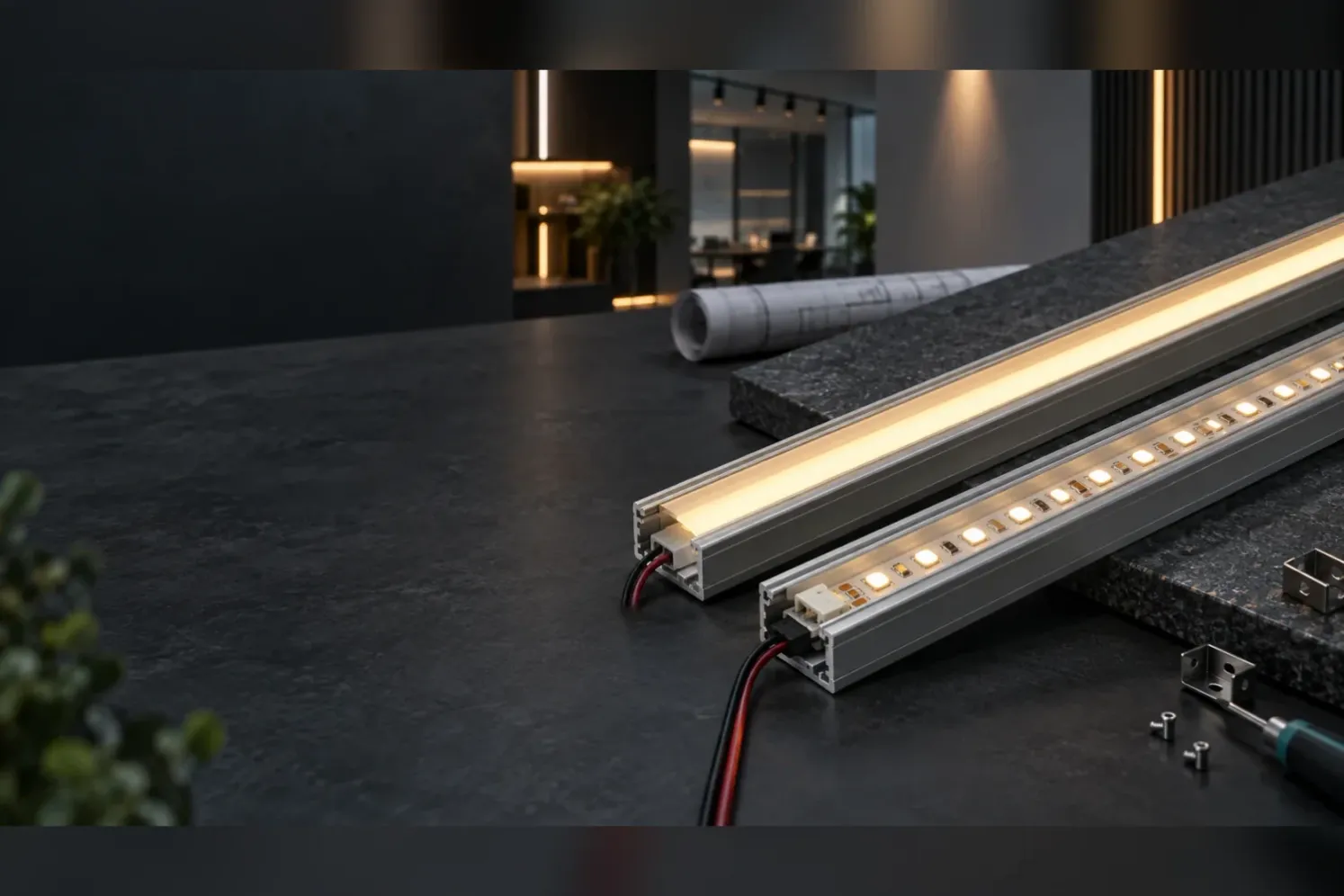
Typical product form | Bare PCB strip, often fitted inside aluminium profiles | Silicone‑extruded neon strip or silicone‑coated strip |
Optimal installation location | Dry indoor areas | Outdoor, building facades, damp‑wet areas |
Light output | Higher (no diffusing layer) | Slightly lower (with diffusing layer) |
Heat dissipation | Better (bare PCB substrate) | Acceptable (silicone provides electrical insulation) |
Flexibility | High (single‑plane bending only) | Very high (multi‑directional bending) |
Cutting & re‑connection | Simple via soldering or connectors | Waterproof sealing required after cutting |
Relative cost | Lower | Higher |
What about IP67 and IP68? When is it necessary to have a rating higher than IP65?
IP67 indicates that the light strip can withstand short-term immersion of 1 meter underwater for up to 30 minutes. This applies to areas where water may occasionally accumulate, such as lanes, ground step lights, or lighting fixtures that may be submerged in puddles.
IP68 indicates that it can be continuously immersed in water under pressure. This is necessary for underwater lighting, fountains, ponds, and pool lights.
For most outdoor lighting applications in buildings, IP65 is sufficient because the light strip will not be immersed in water. But if the installation location may accumulate water, or the light strip may be submerged in water for a short period of time, IP67 should be considered.
Misconceptions in Selection and Practical Suggestions
Common Misconceptions:
Misconception 1: The higher the IP level, the better?
In fact, it needs to be matched according to the purpose. A high level will increase the difficulty of structure and heat dissipation, leading to an increase in cost.
Misconception 2: Only focus on IP and not other performance indicators?
Lighting applications also need to pay attention to IK impact resistance level, anti-corrosion performance, explosion-proof certification, etc.
Selection suggestion:
Clearly define the environmental risks associated with use (dust, moisture, cleaning frequency)
Refer to product certification/report (whether it has truly passed IP testing)
Considering the material, structure, and maintenance difficulty of the lighting fixtures comprehensively
Select the correct IP rating based on project type
To make the selection easier, the following is a quick reference for common LED strip applications.
Application | Recommended IP Rating | Product Type |
|---|---|---|
Indoor cove lighting, dry | IP20 | Bare strip in aluminum profile |
Under-cabinet lighting, dry | IP20 | Bare strip or low-profile neon flex |
Bathroom vanity, outside wet zone | IP44 or IP65 | Silicone-coated strip or neon flex |
Bathroom shower area | IP65 or higher | Neon flex with sealed ends |
Outdoor facade accent | IP65 | Silicone neon flex |
Garden path or step edge | IP65 | Silicone neon flex |
Driveway or ground recessed | IP67 | Encapsulated strip or neon flex |
Fountain or pond lighting | IP68 | Specialized underwater strip |
Frequently Asked Questions (FAQ)
Q: Is the IP65 LED strip completely waterproof?
Answer: No, IP65 indicates water spray resistance, not immersion resistance. It is suitable for rainwater and splashes, but should not be continuously immersed in water.
Q: Can I use IP20 LED light strips in the bathroom?
Answer: Only in areas far from water sources and without direct splashing. For safety reasons, IP65 or higher rating should be used in wet areas.
Q: What is the difference between IP65 and IP67 LED lights?
Answer: IP65 can prevent water spray, while IP67 can withstand short-term immersion of 1 meter underwater for up to 30 minutes. IP67 is more suitable for areas where water may accumulate or soak in puddles.
Q: Can IP65 LED light strips be cut and reconnected?
Answer: Yes, most light strips can be cut at the marked locations. Each cutting end must be resealed with end caps and adhesive to maintain IP65 rating.
Q: What IP rating is required for lighting under cabinets?
Answer: For lighting under indoor kitchen cabinets, IP20 is usually sufficient because the area is dry. If the cabinet is close to a sink or steam source, please consider IP44 or IP65.
Conclusion
The choice of IP level is not necessarily better, choose products with different waterproof levels in different application scenarios. Blindly pursuing high IP ratings incurs higher costs and sometimes reduces light efficiency, heat dissipation efficiency, and increases structural burden.