Oct 19, 2026首页
How to Create Uniform, Glare-Free Lighting for Stretch Ceilings
Learn how membrane structure, LED source selection, spacing, cavity design, power distribution, and dimming affect uniform lighting in large stretch ceilings.
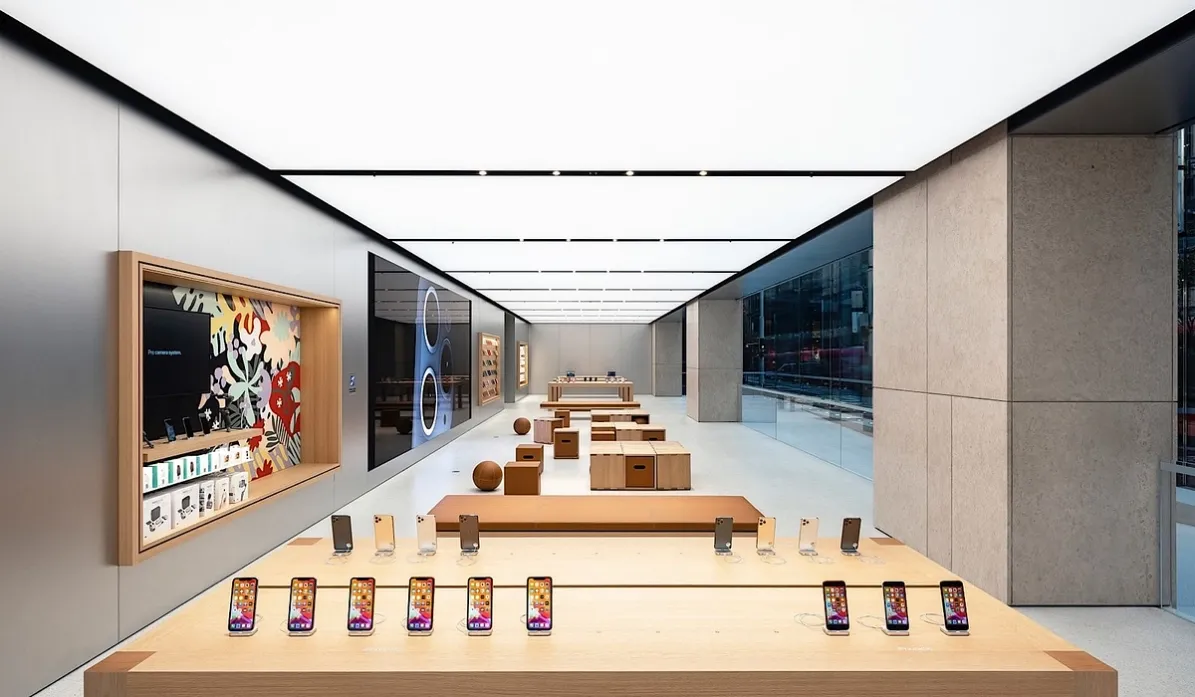
Walk into a Huawei, Apple, or other major-brand store and you may not see any obvious ceiling fixtures, yet the space still feels clean and comfortable. A translucent stretch membrane diffuses the hidden light source inside the ceiling into a large luminous surface, making products more prominent while keeping the ceiling visually uncluttered. This guide explains how this “light without visible fixtures” effect is created.
Context
1、What Is a Stretch Ceiling
2、Stretch Ceiling Installation Steps
3、Factors That Affect Uniform Stretch Ceiling Lighting
4、Frequently Asked Questions
What Is a Stretch Ceiling?
A stretch ceiling can be understood as an enlarged light box. The visible surface is a translucent membrane, with the light source concealed behind it. Profiles around the perimeter hold the membrane flat, while the top or sides provide the load-bearing base. Point or linear light sources are reflected within the cavity and diffused through the membrane, creating a larger area of soft light.
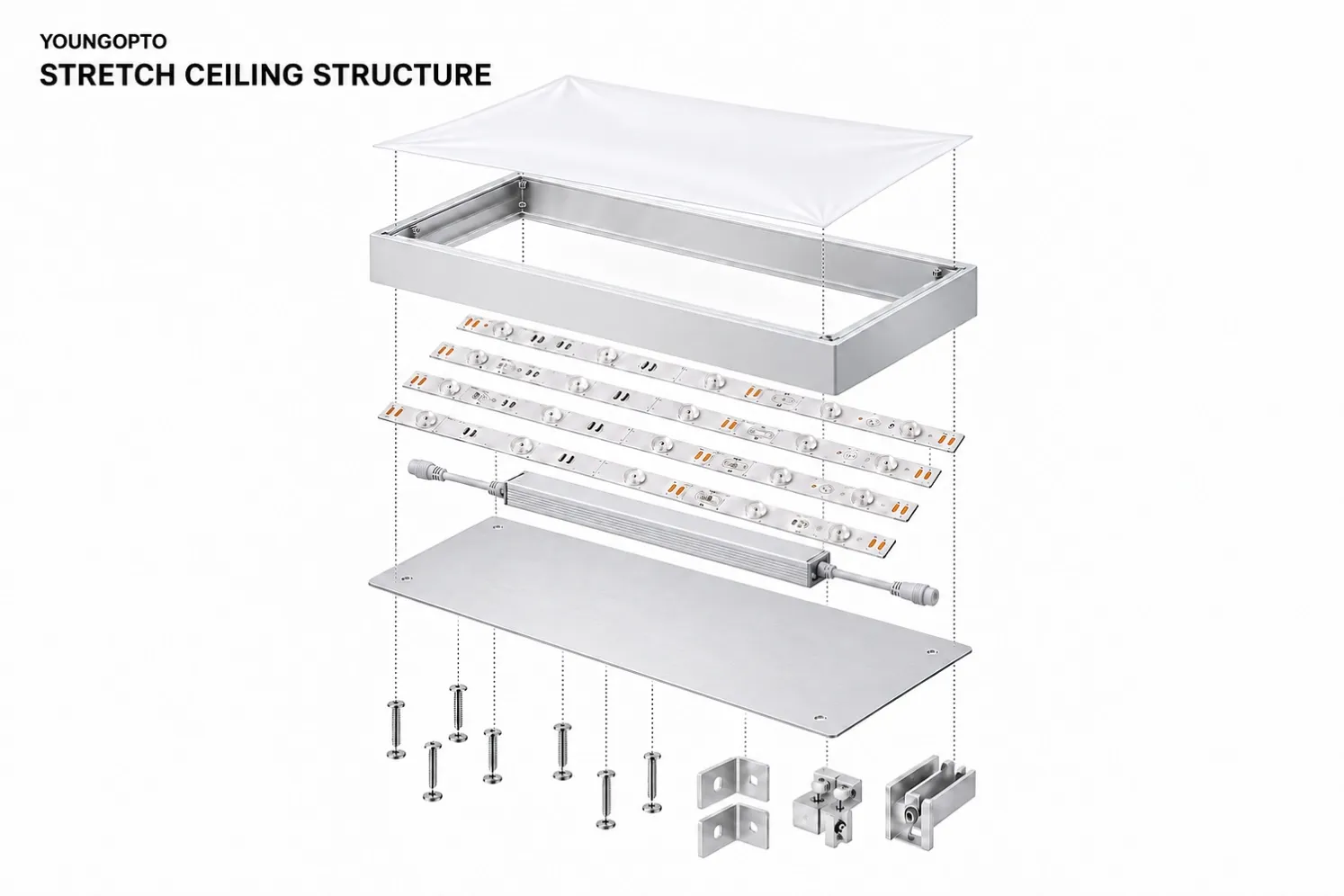
Stretch Ceiling Construction
A stretch ceiling consists mainly of three parts: the light source, the perimeter tracks and profiles, and the translucent membrane.
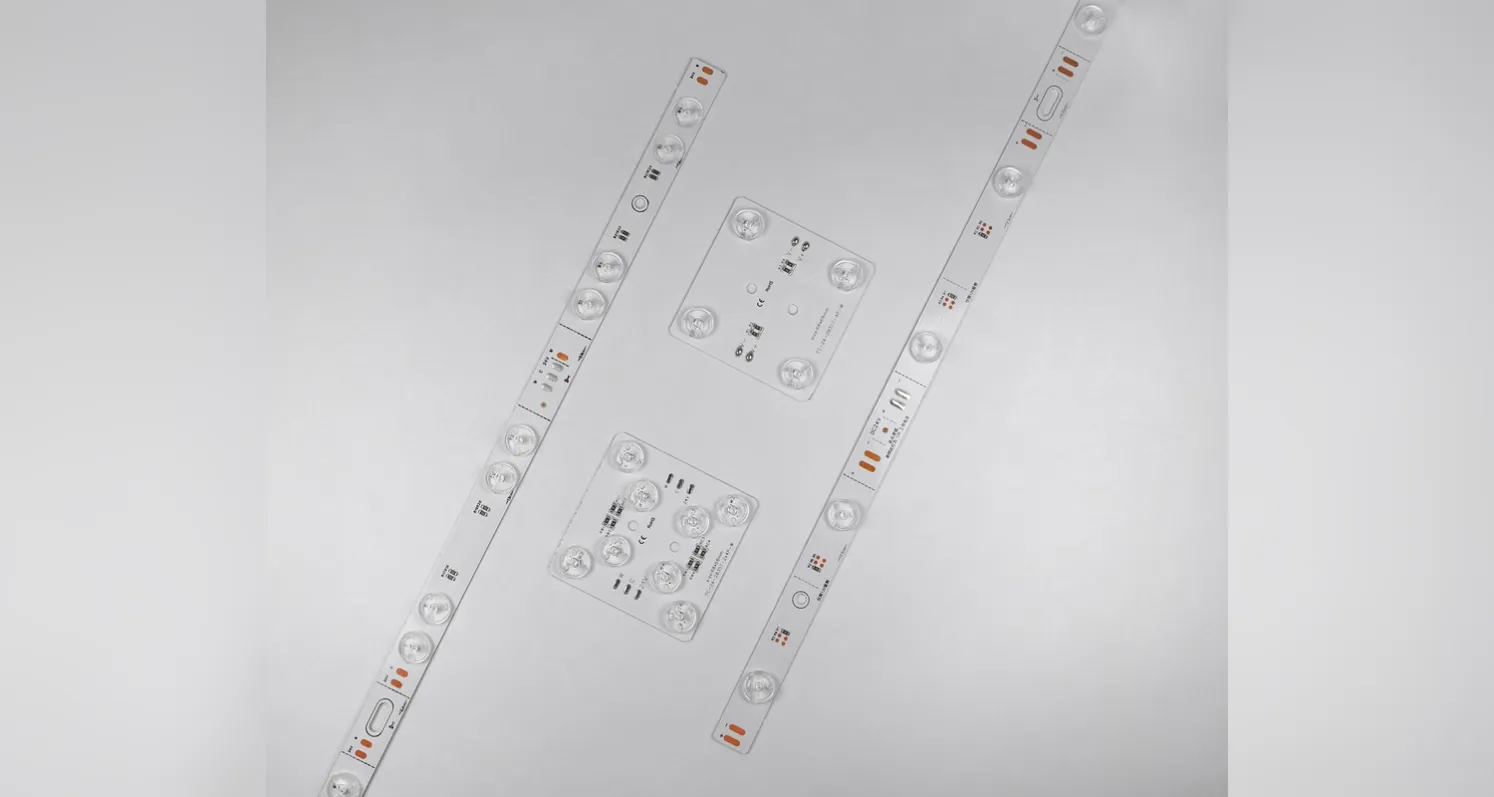
1. Light Source
The light source must do more than illuminate the membrane. It should also use as few mounting points as practical while allowing each beam to overlap evenly.
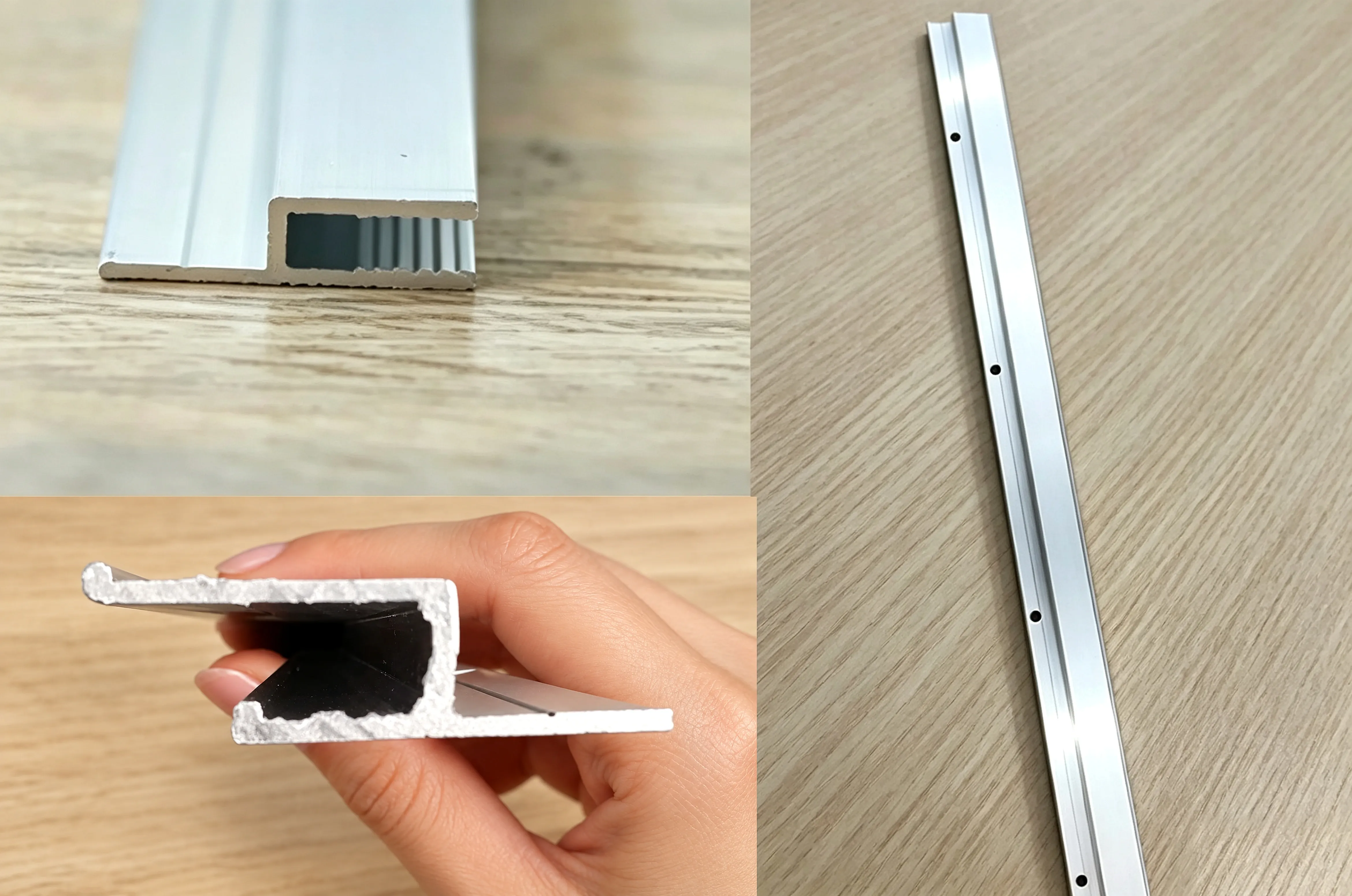
2. Perimeter Tracks and Profiles
The tracks and profiles keep the membrane flat and transfer its tension to the base structure. Straight runs, inside corners, outside corners, curves, and double-membrane systems require different profiles.
3. Stretch Membrane
The stretch membrane is commonly called “stretch fabric” and is formed through one or more cutting processes. Two main material types are commonly used for stretch ceilings.
3.1 Class A Membrane
Material: Fiberglass substrate with a fluororesin coating (inorganic material)
Temperature range: -50 to 120°C
Light transmittance: 45%–68% (high-transmittance or frosted effects can be customized; generally slightly lower than Class B membrane)
Thickness and standard widths: 0.18–0.25 mm thick; standard widths of 1.5–3.5 m

3.2 Class B Membrane
Material: PVC (polyvinyl chloride)
B1 membrane temperature range: -25 to 45°C
Light transmittance: Approximately 40%–70% for Class B translucent light-diffusing membrane
Thickness and standard widths: 0.18–0.25 mm thick; standard widths of 1.5–6.0 m

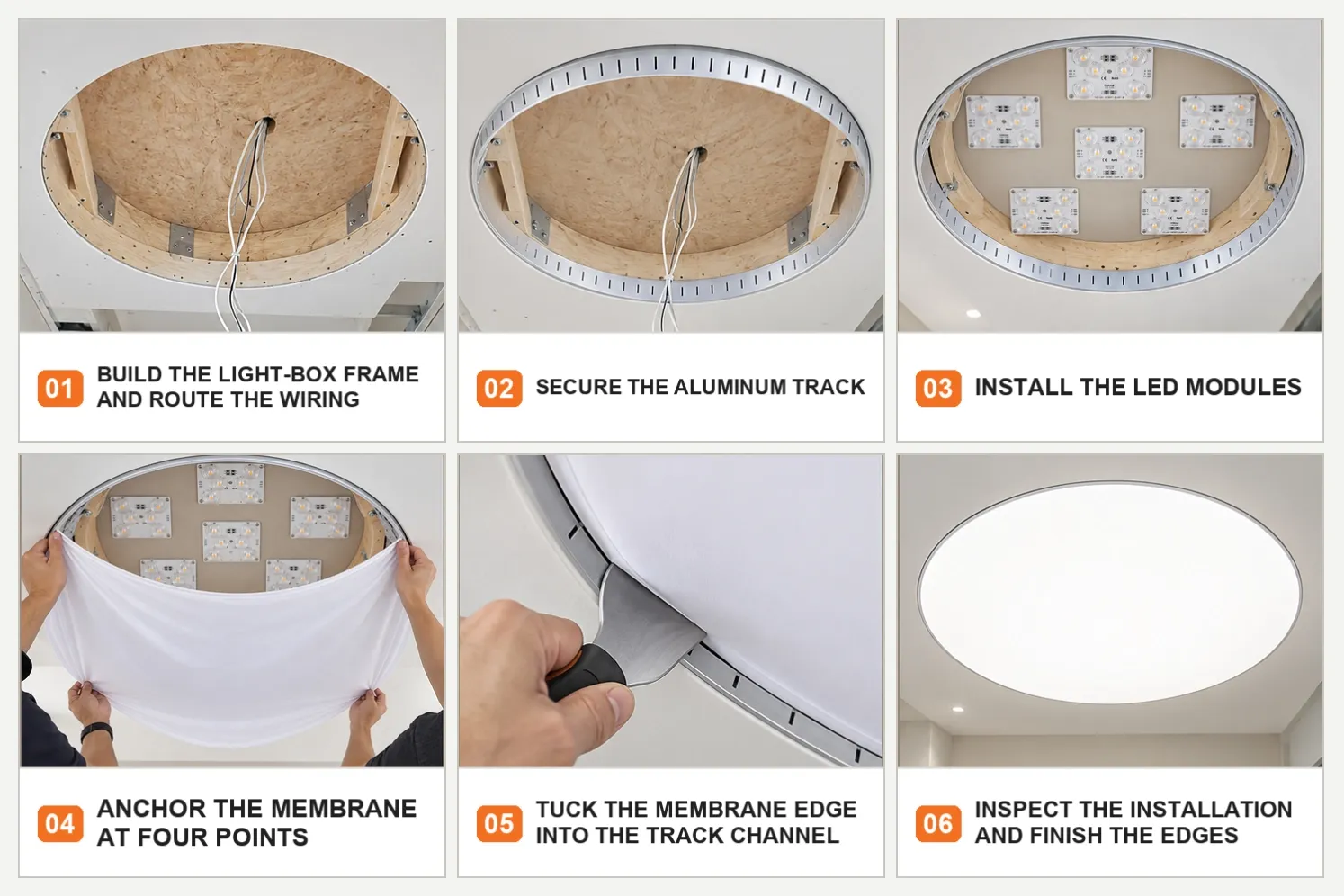
Stretch Ceiling Installation Steps
On-site installation generally involves six steps:
- During the carpentry stage, build the light-cavity frame and reserve the wiring routes.
- Secure the perimeter tracks.
- Install the LED block lights.
- Fix the four corners of the stretch membrane to the installed tracks.
- Use a tucking tool to insert the membrane edge into the track groove.
- Inspect the installation and complete the edge finishing after confirming that everything is correct.
Factors That Affect Uniform Stretch Ceiling Lighting
Once a stretch ceiling produces uneven light, color differences and shadows become obvious as soon as the system is switched on, reducing the perceived quality of the space. Uniform light and an evenly illuminated membrane are necessary to create a soft, complete luminous surface. The main factors are light-source configuration, cavity structure, and power distribution.
1. Light Source Configuration
1.1 Light Source Spacing
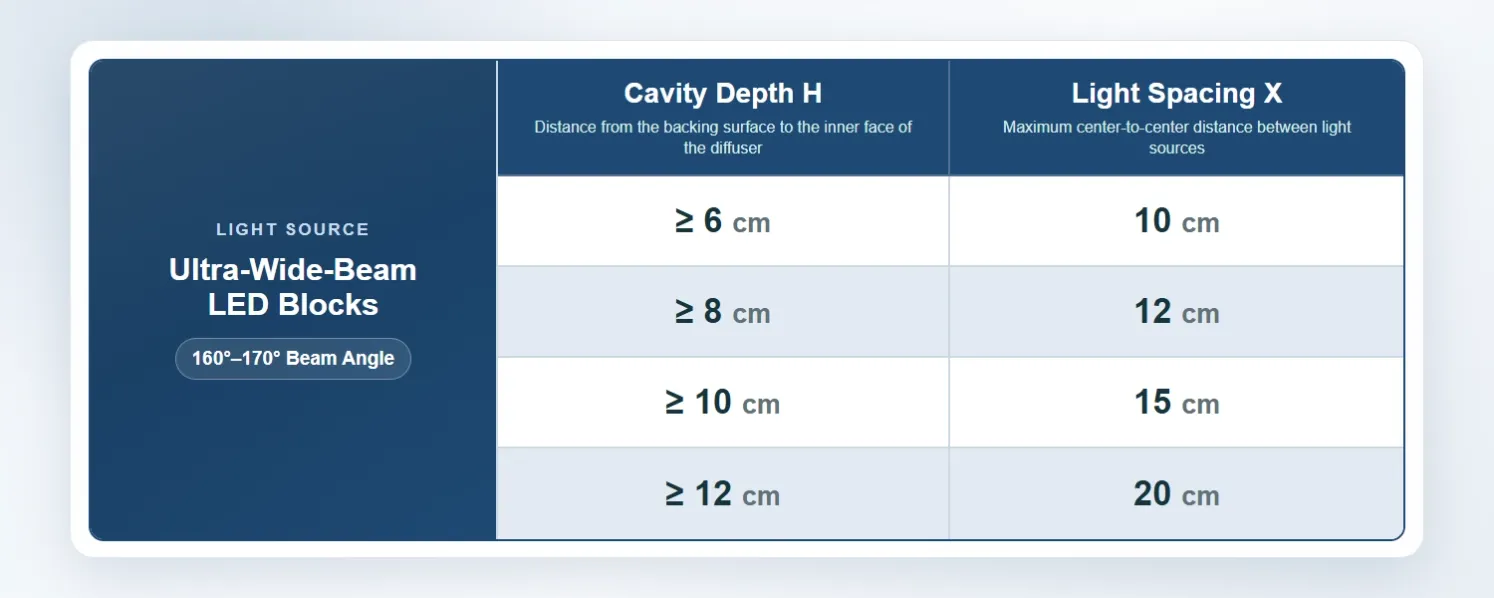
Spacing and layout: The spacing between adjacent light sources (X) should be determined together with the lightbox depth (H). The table below provides recommended spacing for common lightbox depths.
1.2 Color Consistency
Consistent light color: The color temperature and color tolerance (SDCM) of the light sources should remain as consistent as possible. A color tolerance within three steps is preferable. Mixing light sources from different batches or with different color temperatures can make one area of the ceiling appear white and another yellow.
1.3 Brightness and Luminous Efficacy
Brightness and efficacy: The luminous flux and luminous efficacy (lm/W) should match the light-box area and ceiling height. Insufficient overall brightness or localized overexposure can both reduce visual uniformity. Appropriate power allocation and a dimming system can be used for adjustment.
Yuyang LED block lights and wide-angle rigid LED bars are designed for stretch ceilings and advertising light boxes. With a 170° wide beam, they provide broader coverage, allowing adjacent beam patterns to overlap more fully and helping reduce visible LED points, bright bands, and localized dark areas. Three-step SDCM control helps maintain consistent color temperature across a large luminous surface, reducing the risk of one section appearing yellow while another appears white.
LED block lights are suitable for regular large-area backlighting and custom-shaped installations. Their broader coverage can reduce the number of mounting points and wire connections when conditions permit. Wide-angle rigid LED bars provide orderly rows of light and are better suited to long, rectangular, and other regular light boxes or stretch ceilings. Both solutions can be laid out according to the cavity depth, membrane transmittance, and target brightness.
If you are working on a stretch ceiling or light-box project, you can provide the dimensions of the luminous surface, cavity depth, membrane or graphic material, color temperature, and brightness requirements. We can recommend a light-source type and preliminary spacing based on the actual structure for project selection reference.
2. Membrane Diffusion and Cavity Reflectance
The membrane performs the final stage of light mixing, while the cavity determines how much light is lost. Dark wood panels, metal components, openings, and protruding wires can absorb light or create shadows. A uniformly colored, light-reflective interior surface is recommended. Wires should be fixed against the top of the cavity, and dark components should be kept away from the visible luminous area whenever possible.
3. Power Distribution and Zoning
3.1 Non-Dimming Solution
For a large stretch ceiling, do not connect every light source into one long chain powered from only one end. Voltage drop will make the end near the power supply brighter and the far end darker. Divide the circuits according to the structural sections and power-feed distance. Use two-end power feed or additional feed points when necessary.
3.2 Dimming Solution
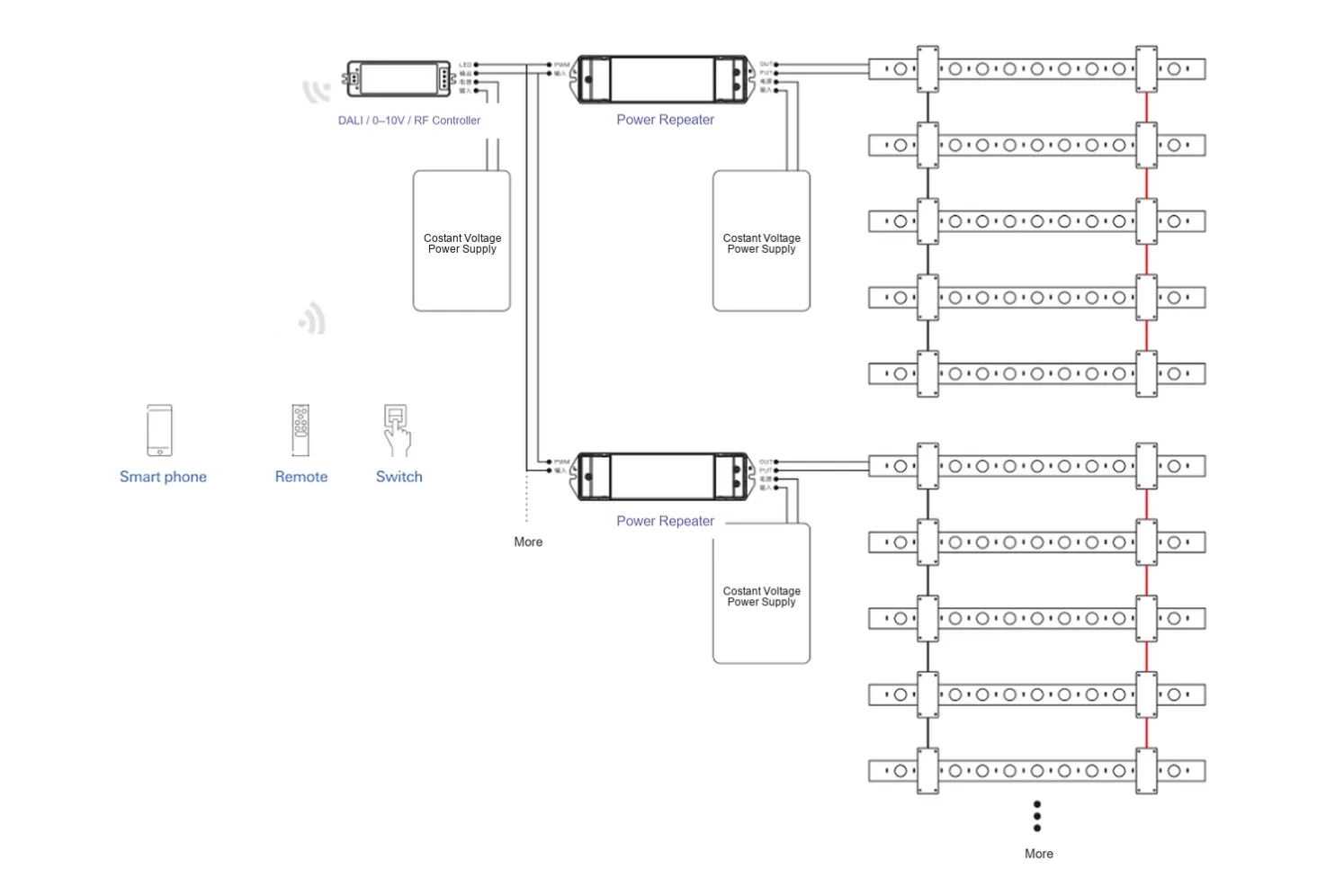
The system power of a large light box or stretch ceiling may reach several thousand watts or even more than 10,000 watts, often requiring dozens or hundreds of control units. If different zones do not dim in sync, visible brightness differences can appear across the membrane, especially at low output or during gradual dimming.
These projects can use a “master controller plus parallel power expanders” configuration. A single PWM signal is distributed by wire to drive each circuit, allowing different zones to dim in sync and helping maintain consistent brightness across the luminous surface.
Depending on project requirements, the PWM master controller can support wireless control, 0–10 V, DMX512, DALI, TRIAC, or PUSH switches. If installation flexibility and on-site commissioning efficiency are priorities, wireless control combined with power expanders is generally more convenient. The final configuration must still be confirmed according to total system power, circuit quantity, transmission distance, and control interface.
Frequently Asked Questions
Does Using More Lights Always Improve Uniformity?
Not necessarily. More lights can increase beam overlap, but dark areas may remain if the perimeter, voltage drop, reflective cavity, or equipment obstructions are not handled properly. Excessively dense placement also increases power consumption, temperature rise, and the number of potential failure points.
Are COB LED Strips Always the Most Uniform Choice for Stretch Ceilings?
COB LED strips can create a continuous line of light, but large-area backlighting depends more on beam coverage. When the cavity has sufficient depth, LED block lights, modules, or wide-angle rigid LED bars can provide better coverage with fewer mounting points.
What If the Light-Box Depth Is Insufficient?
First compare wide-beam light sources, then improve uniformity by reducing the spacing or selecting a membrane with stronger diffusion. If LED shadows remain visible, evaluate a double-membrane system or adjust the ceiling structure.
Why Is the Center Uniform While the Perimeter Is Dark?
The outermost row of light sources may be too far from the frame, the perimeter profile may block the light, or the cavity sidewalls may absorb light. First reduce the distance between the outermost row and the frame, then inspect the edge lighting and the interior reflective surface.
What Should I Do If One Row of Lights Fails After the Membrane Is Installed?
If no maintenance route was reserved for the power supplies and connectors, the membrane will usually need to be removed for service. During the design stage, provide access openings for each circuit. Before installing the membrane, energize and test each circuit and keep the system illuminated for an extended test.
How Can Insects Be Kept Out of a Stretch Ceiling?
Insect shadows are usually caused by openings between the light box and the building cavity, not by the membrane itself. Block the entry points first, then consider a double-membrane system. Check cable penetrations, the edges of air vents, access openings, profile joints, and wall penetrations. Seal gaps that do not require ventilation, and use appropriate insect-control measures where ventilation is necessary. Do not completely seal the power supplies and lighting cavity merely to keep insects out. For commercial spaces that are especially sensitive to insect shadows, a double-membrane system can be evaluated: the upper layer isolates dust and insects, while the lower layer provides the visible finish.
How Should Sprinklers and Smoke Detectors Be Handled?
Sprinklers and smoke detectors must not be enclosed inside the stretch ceiling or light box. Their locations should be confirmed in advance, and they should be fixed to supports on the base structure. Openings must be reinforced with dedicated retaining rings. For a single Class B elastic membrane, only one or two openings are recommended. A Class A non-elastic membrane can accommodate openings according to the number of devices on site.