Sep 7, 2026
How to Choose LED Light Sources for Channel Letters for Even Illumination and Less Rework
Learn how to select LED block modules,flexible strips, COB strips, and neon flex for different channel-letter structures, depths, and installation conditions.
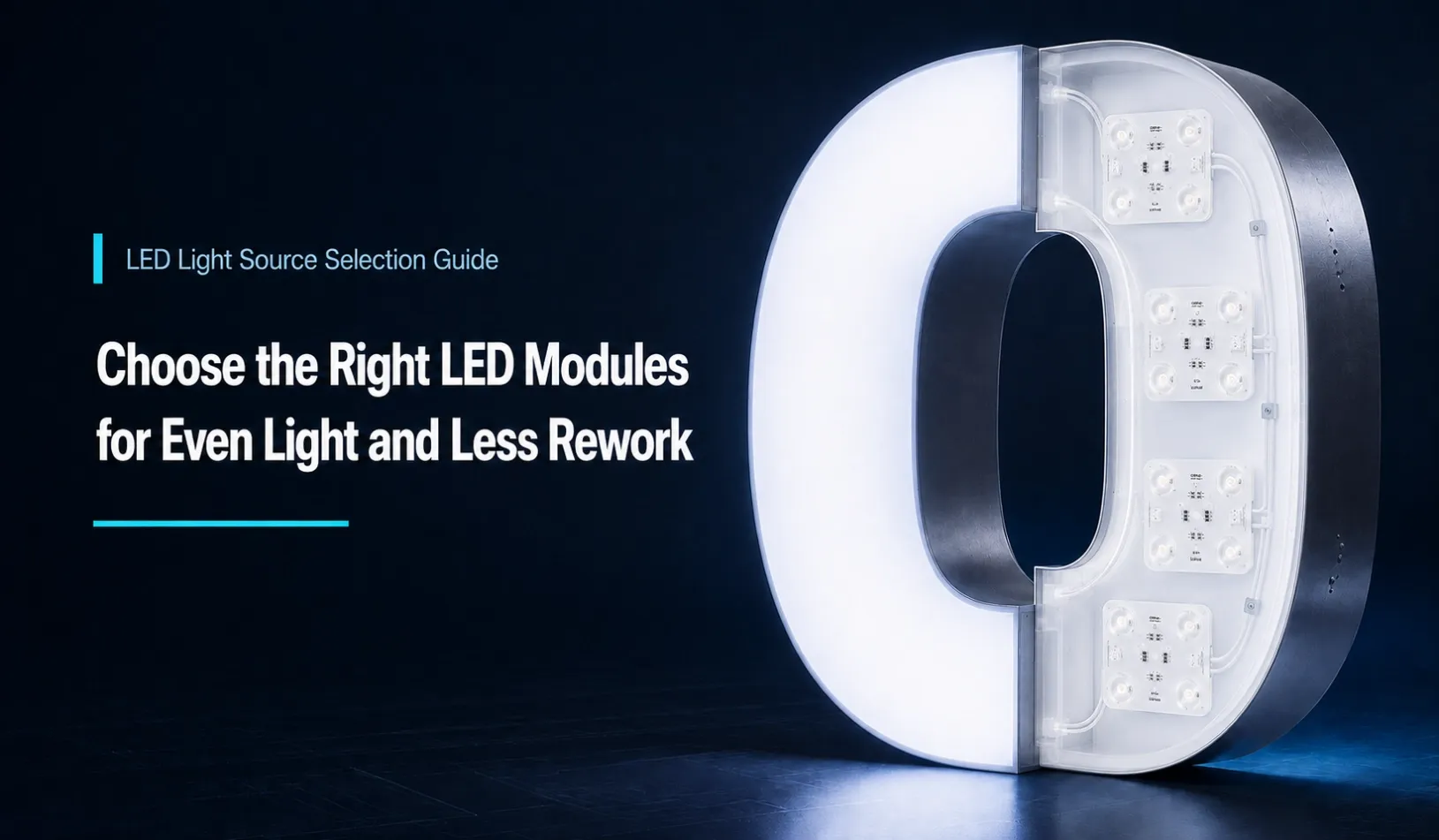
Illuminated signs combine information, visual guidance, and decorative lighting. They keep brands visible at night, help shape the atmosphere of a space, and improve the overall appearance of commercial environments. This is why illuminated signs are widely used in city nightscapes, commercial districts, municipal roads, and cultural and tourism venues.
A complete illuminated sign system consists primarily of the light source, the letter or sign shell, and the mounting structure. The LED light source acts as the heart of the sign. It determines brightness, illumination uniformity, color performance, and visual quality, while also affecting energy use, service life, and maintenance costs.
With so many illuminated-sign structures and applications, how should you choose the right LED light source? The following sections examine the key factors.
1.Five Common Illuminated-Sign Structures 2. Four Common LED Light Sources 3. Common Applications and LED Light Source Recommendations 4. Common Problems and Solutions
Five Common Illuminated-Sign Structures
The five most common structures are front-lit letters, halo-lit letters, front-and-halo-lit letters, neon-outline signs with visible light sources, and ultra-thin edge-lit signs. Each structure sends light in a different direction and creates a different visual effect. These differences determine the type of light source, its mounting position, and the layout method.
Illumination Structure | What the Light Source Must Do | More Suitable Options | Key Checks |
Front-lit letters | Spread light evenly across the acrylic face | LED modules
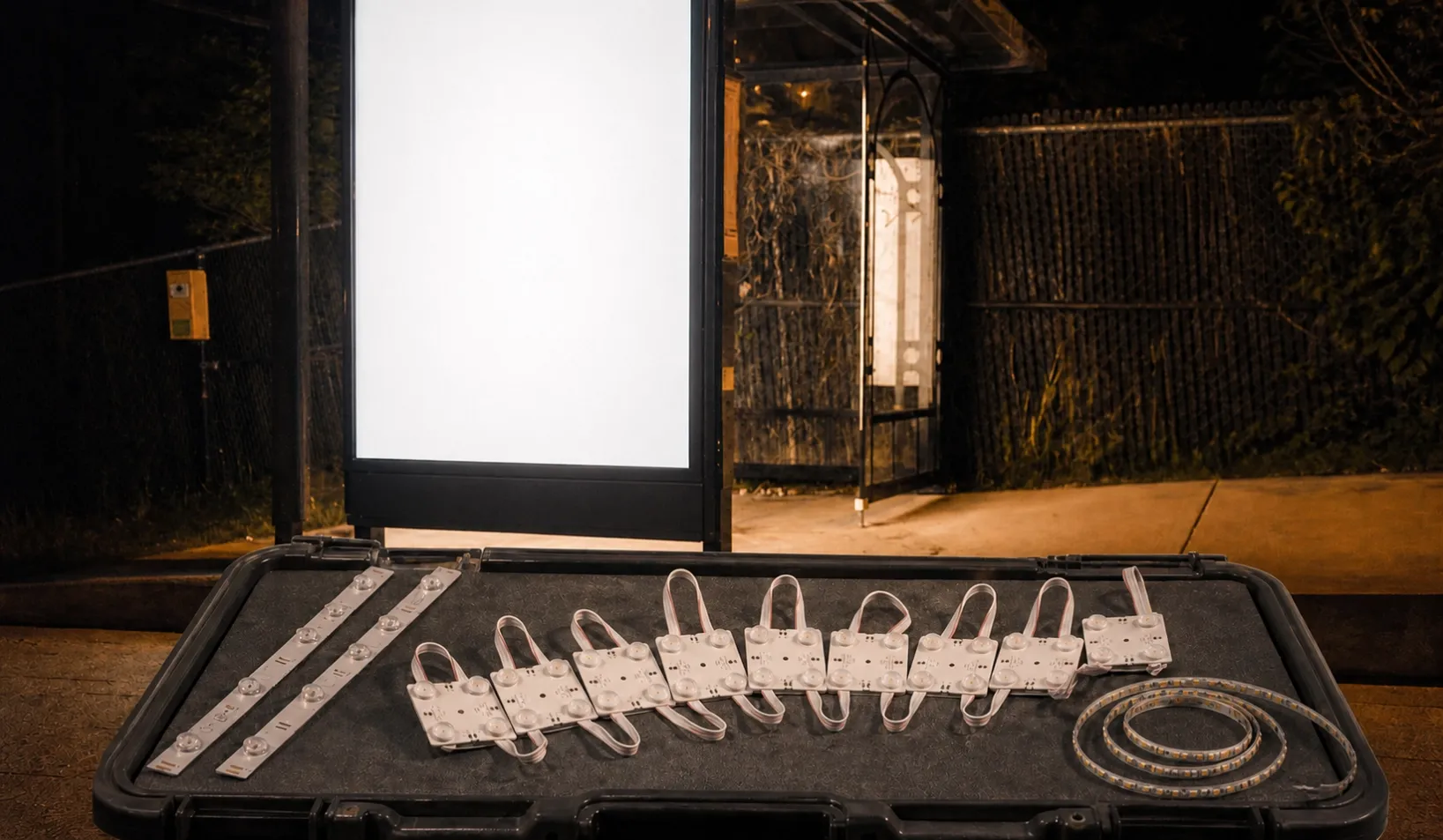
LED block modules
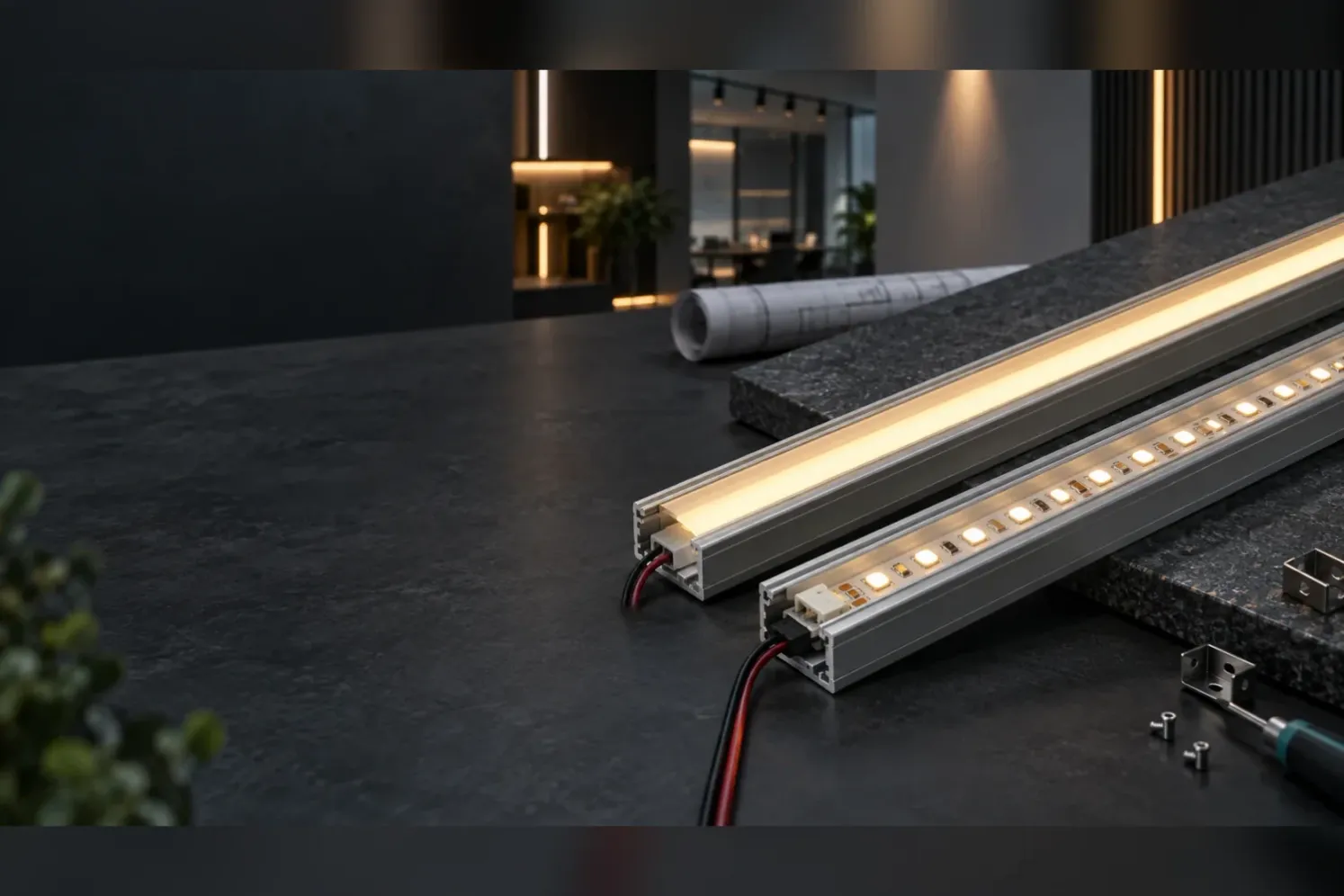
Rigid LED bars | Hot spots
Dark corners
Stroke edges |
Halo-lit letters | Project light onto the wall to create a continuous halo | Flexible LED strips
COB LED strips
Small modules | Distance from wall
Wall reflectance
Breaks in the halo |
Front-and-halo-lit letters | Control the front illumination and rear halo separately | Independent light sources and circuits for the front and rear | Balance between both sides
Maintenance space |
Neon-outline signs | Use a visible line of light to reproduce the letter outline | Neon flex | Bending direction
Minimum bend radius
Cutting increment |
Ultra-thin edge-lit signs | Send light into the light guide plate from the edge | Edge-lighting rigid LED bars | Light-guide dot pattern
Light-entry edge
Heat dissipation |
Four Common LED Light Sources for Illuminated Signs
LED Block Modules
Choose LED block modules when a letter or logo has wide strokes, a shallow cavity, and a large area to cover. Their advantage is not limited to the wattage of each module. One light source can cover a larger area, which reduces the wiring and installation time associated with overly dense layouts. Block modules are not suitable for narrow strokes because the circuit board may not fit inside the cavity.
Flexible LED Strips and COB LED Strips
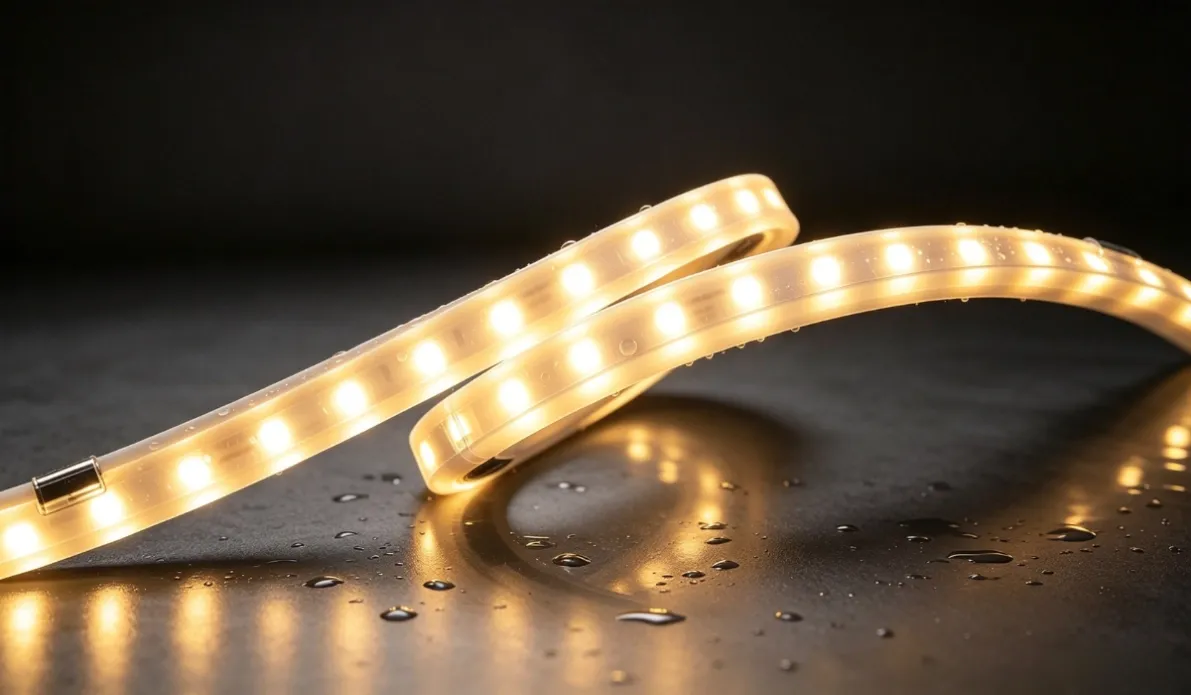
Flexible LED strips are better suited to halo-lit letters, curved outlines, and some narrow channels. When the light source remains visible at close range after installation, COB LED strips generally make it easier to achieve a continuous line of light. Flexibility does not mean the strip can bend in any direction. Products have specific top-bending or side-bending orientations and minimum bend radii. Sharp folds can damage the circuit or silicone housing.
Neon Flex
When the design calls for a visible line of light, such as a bar sign, a decorative cafe sign, or an architectural outline, neon flex is more direct than modules hidden inside a letter shell. First check whether the cross-sectional size can reproduce the details of the lettering. Then evaluate the bending direction, cutting increment, wire exit, and outdoor sealing.
Light Source | Suitable Projects | Main Advantages | Common Limitations |
LED block modules | Wide-stroke logos
Shallow light boxes and large letters | Large coverage area
Relatively less wiring | Not suitable for very narrow strokes
Mounting width must be checked |
Flexible LED strips | Halo lighting
Gentle curves and outline fill lighting | Flexible cutting and routing
Fast installation | May bend only in the specified direction
Long runs require voltage-drop control |
COB LED strips | Continuous light visible at close range
Narrow channels and curved outlines | Less visible pixelation
Good continuity | Limited cutting increments and bend radius
Heat dissipation cannot be ignored |
Neon flex | Open neon-outline signs
Decorative lines | Complete illuminated surface
Clear finished outline | Cross-section limits fine details
Connections and ends must be resealed |
Common Applications and LED Light Source Recommendations
Application | Light Source to Test First | Main Evaluation Criteria |
Wide-stroke logos and large letters | Wide-angle LED block modules | Mounting width
Area coverage
Edge brightness |
Metal halo-lit letters | Flexible LED strips, COB LED strips, or small modules | Distance from wall
Wall reflectance
Halo continuity |
Continuous curves and narrow channels | COB LED strips | Cutting increment
Bending direction
Heat dissipation |
Open neon outlines | Neon flex | Cross-sectional size
Minimum bend radius
End sealing |
Ultra-thin edge-lit signs | super narrow LED strips | Light-guide design
Light-entry edge
Heat dissipation and mounting |
Common Problems and Solutions
What LED Module Spacing Works for Channel Letters
There is no fixed spacing that works for every project. Shallow letters about 30 to 50 mm deep usually require smaller, wide-angle light sources arranged more closely together. Determine the final spacing from the lens, face material, and narrowest stroke, then confirm it with a physical sample letter.
Should Channel Letters Use 12 V or 24 V
A 12 V system is common for small letters and short wire runs. A 24 V system is often better for large letters, long runs, or higher-power LED strips because it draws less current at the same power and makes voltage drop easier to control. The rated voltages of the light source and power supply must match.
How Much Power-Supply Headroom Is Needed
A common practice is to keep the continuous load at about 80% of the rated capacity. Also follow the power-supply manufacturer's load requirements and consider ambient temperature and installation conditions. Hot or enclosed locations may require additional headroom.
Do More LEDs Always Make a Channel Letter Brighter
Not necessarily. LED density mainly affects whether the light appears continuous. Brightness also depends on total luminous flux, power, efficacy, and the light transmission of the face material. Excessive density also increases heat, wiring, and the number of potential failure points.
Is a Waterproof Light Source Enough for Outdoor Use
No. Connections, cut ends, cable entry holes, drainage in the letter shell, and the power-supply enclosure all require protection. The IP rating of one component does not mean the complete illuminated sign has the same level of protection.
Can COB LED Strips Be Used in Channel Letters
Yes, but they are better suited to continuous curves, halo lighting, and some narrow channels. Their suitability for standard front-lit letters depends on cavity depth, mounting surface, cutting increment, bending direction, heat dissipation, and the actual light-mixing result.
Why Does a Sample Letter Look Uniform but Production Units Show Color Differences
Common causes include changes between LED or face-material batches, differences in power-supply output, voltage drop in the wiring, and inconsistent interior colors. Before production, lock the key materials and record the color-temperature bin, layout, and wiring parameters.
How Should Module Spacing Be Determined
Start with the specific product's light-distribution and layout recommendations, then test it in the actual letter shell. Extra care is needed when the letter is shallow, the face material is dark, or the strokes are narrow. Do not test only one large uppercase letter with straight strokes. Also evaluate enclosed corners, the narrowest strokes, wire-routing areas, and transitions between multiple rows of light sources.
How Can Wiring Reduce Voltage Drop
- Avoid running one long wire through multiple letters from beginning to end.
- For large projects, divide the load into circuits by letter group or area, and place the power supply close to the load.
- Select the wire gauge according to current and distance, not only for ease of connection.
- After powering the system, measure the actual voltage at the power-supply end and at the farthest point, and check the brightness at the end of the run.