Jul 31, 2026
A comprehensive guide to the spatial color temperature matching of LED strip and LED block
Learn how to Select the correct color temperature for your projects. The color temperature is the "atmosphere" you choose for the space - warm, neutral, or refreshing.
Light is not just a tool to illuminate a room, it is the soul of space, the guide of emotions, and the guardian of health. From warm candlelight to smart LED, lighting has long surpassed the basic function of "visible" and become the key to shaping spatial atmosphere, regulating human rhythm, and improving quality of life.
How to choose the most suitable color temperature for your space? This article will explore the color temperature selection of LED strip and LED block in home, office, commercial, medical, and hotel settings from the following four parts, helping you create a healthier, more efficient, and more beautiful lighting environment.
Part 1: Understanding Color Temperature - From Kelvin to Spatial Emotions
Part 2: LED Strip - Color Temperature Logic of Flexible Light
Part 3: LED Block- Color Temperature Decision for Large Area Lighting
Part 4: Beyond Color Temperature - Three Other Equally Key Indicators
Part 1: Understanding Color Temperature - From Kelvin to Spatial Emotions
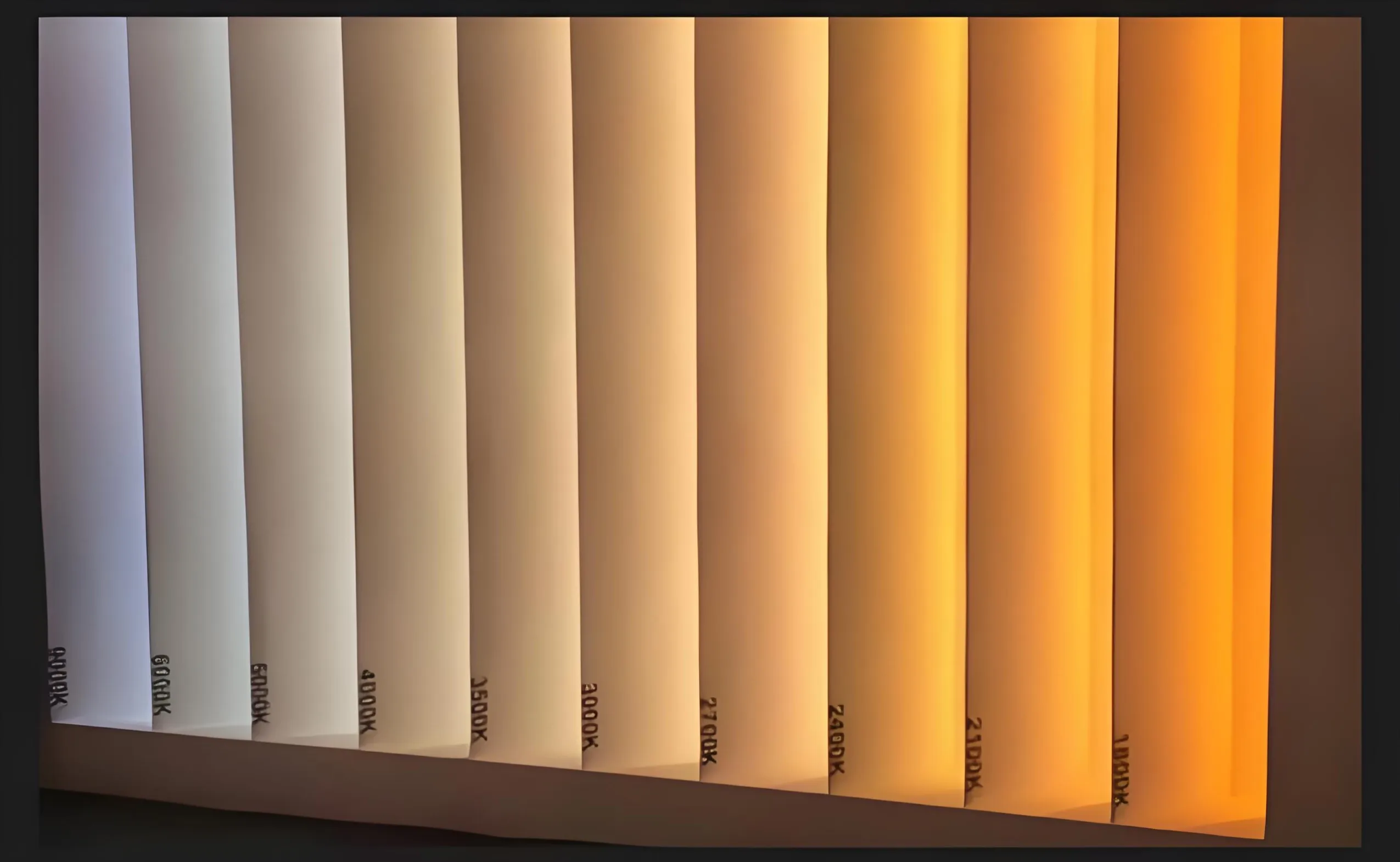
Color temperature is measured in Kelvin (K) and describes the appearance of the light emitted by a light source, ranging from warm yellow to cool blue. The commonly used range is from about 1000K (candlelight) to over 10000K (cloudy), but most residential and commercial LED lighting is concentrated between 2700K and 6500K.
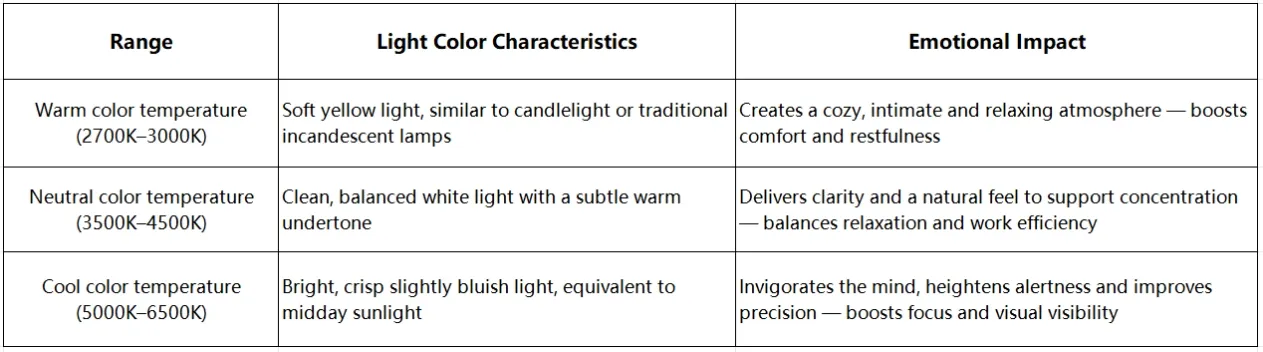
The different effects of the three common color temperature ranges on emotions.
Color temperature can also affect the presentation of colors in space. Warm light will enhance red, orange, and yellow, while cool light will make blue and green more prominent, while darkening warm tones. More importantly, light affects our circadian rhythm - exposure to cool blue light at night can disrupt sleep, so experts recommend prioritizing warm light in bedrooms and living spaces used at night.
Part 2: LED Strip - Color Temperature Logic of Flexible Light
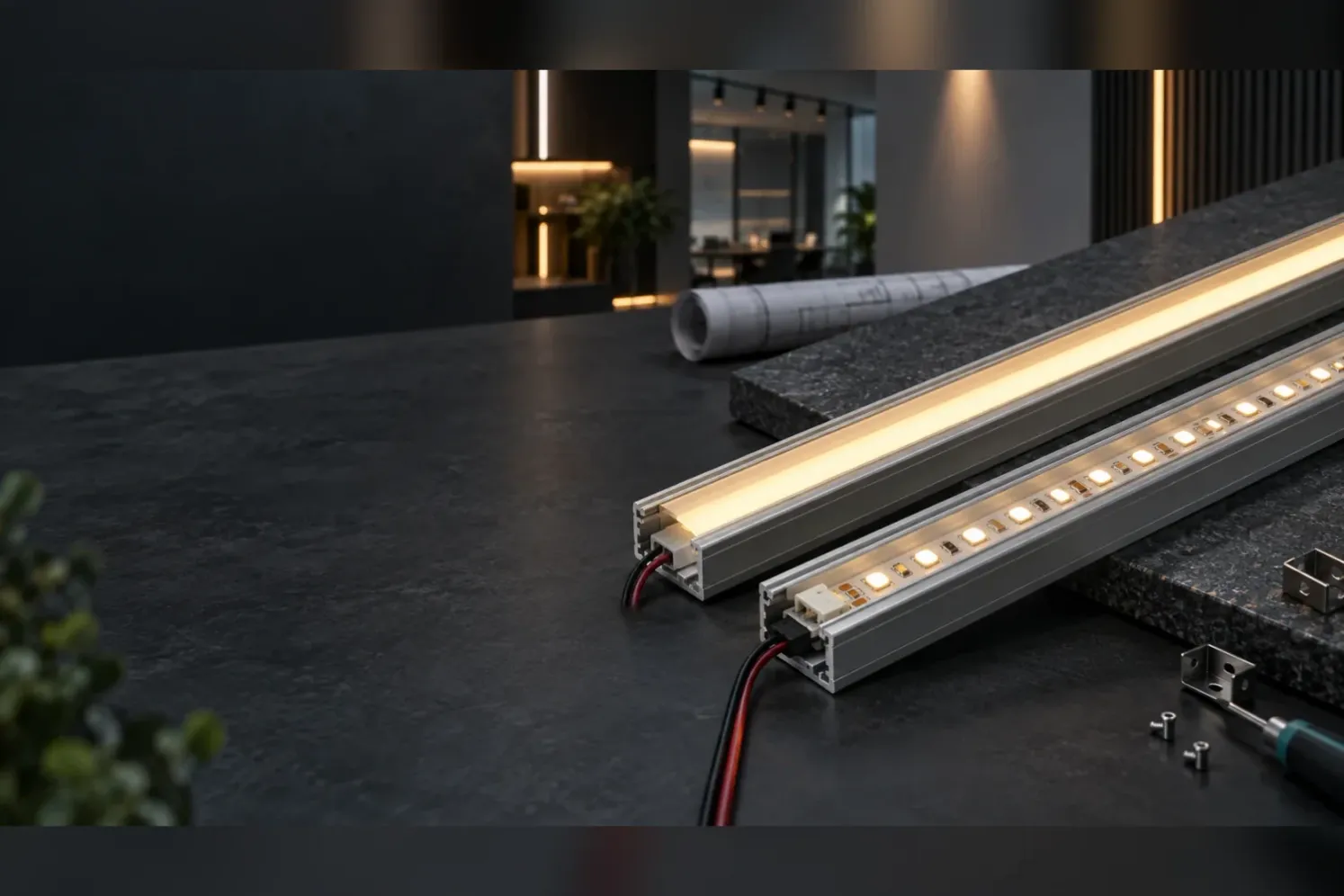
LED light strips are the king of atmosphere in lighting design. They can be bent and cut arbitrarily, and light is evenly emitted from a continuous line. They are very suitable for wall washing, ceiling concealed trough, cabinet lighting, and building contour outlining. The color temperature you choose determines whether the spatial atmosphere is warm and soft, or bright and refreshing.
Color temperature recommendation for LED strip application scenarios Residential atmosphere (living room wall wash, ceiling sink, bedroom headboard):2700K -3000K - Warm light creates a relaxed and friendly atmosphere, suitable for leisure time
Soft warm light enhances the texture of wooden furniture and warm toned decorations, making skin tone appear natural and pleasing to the eye Cabinets and display lighting (display cabinets, wine cabinets, cloakrooms):
3000K - Warm white light adds luxury to high-end products
4000K - Neutral white light provides clarity and accurate color rendering, making it easy to view in detail
Operation and work area (under kitchen cabinets, study desktop):
4000K - Neutral white light provides clear vision without being glaring, reducing eye fatigue during fine work
Retail and Commercial Display:
3500K-4500K - Adjust according to brand tone and product type
The clothing area is suitable for 3500K-4000K to accurately present the fabric and skin tone, while the jewelry area requires 4000K-5000K to highlight the metallic luster.
Part 3: Block Lights - Color Temperature Decision for Large Area Lighting
If the light strip is a 'paintbrush', then the block light is a 'canvas'. It provides the basic lighting tone, laying the foundation for the overall atmosphere of the space. Block lights are widely used in commercial spaces such as offices and car 4S stores. With their uniform light distribution, glare free performance, and energy-saving advantages, they have become the preferred choice for large-area lighting.
Color temperature recommendation for application scenarios of led block
Space Type | Recommended Color Temperature | Reason |
Offices & Work Zones | 4000K | Industry standard — it delivers clear, bright illumination, boosts alertness and reduces eye strain, without creating an overly cold, sterile feel |
Retail Stores | 3500K–4500K | Balanced lighting makes merchandise appealing while preserving true color accuracy; the value can be fine-tuned based on product categories |
Restaurants & Hotels | 2700K–3000K | Warm light builds a cozy, intimate dining atmosphere and makes food look more appetizing |
Premium Hotels & Commercial Spaces | 3000K | Warm light conveys a sense of quality, comfort and exclusive experience |
The unique advantages of block lights
Uniform illumination - no hotspots, no dark areas, ideal basic lighting solution
Comfortable lighting - reduces visual fatigue during prolonged stays in space
Anti glare - optional low UGR (uniform glare value) model to ensure visual comfort
Part 4: Apart from Color Temperature - Three Other Equally Important Indicators
Color temperature is crucial, but it is not the only element of high-quality lighting. To ensure that the space is both aesthetically pleasing and practical, please pay attention to the following three indicators simultaneously:
1. Color rendering index (CRI)
CRI measures the accuracy of color presentatiuon nder a light source, with a maximum score of 100. The higher the CRI value (above 90), the more natural and vibrant the color of the object appears. A low color rendering index light source can make the skin appear dull and the product lose its appeal, no matter how accurate the color temperature is.
2. Color Temperature Consistency (SDCM)
When installing multiple lighting fixtures in the same space, the color temperature differences between different fixtures can cause visual confusion. Professional projects should require a color tolerance of<3 SDCM for lighting fixtures to ensure that the color temperature of all fixtures is visually consistent.
3. Adjustable color temperature technology
The adjustable color temperature light source and control system can switch color temperature as needed according to actual scene requirements.
Multi functional space - for example, using 4000K to maintain focus during morning meetings in the conference room, and switching to 2700K to create an atmosphere during evening parties
Rhythmic lighting - By simulating changes in sunlight, it enhances the physical and mental health of users
Dynamic retail environment - using refreshing white light during business hours to enhance vitality, and switching to warm light for evening activities to create a warm atmosphere
Conclusion: Select the correct color temperature for your projects.
The color temperature is the "atmosphere" you choose for the space - warm, neutral, or refreshing.Warm light whispers comfort and intimacy; Neutral light conveys clarity and balance; Cold light declares energy and precision. Each color temperature has its appropriate position and serves different purposes.