Jul 9, 2026
Is CRI the higher the better
CRI is not necessarily the higher the better. Ultra high color rendering sacrifices light efficiency and brightness.
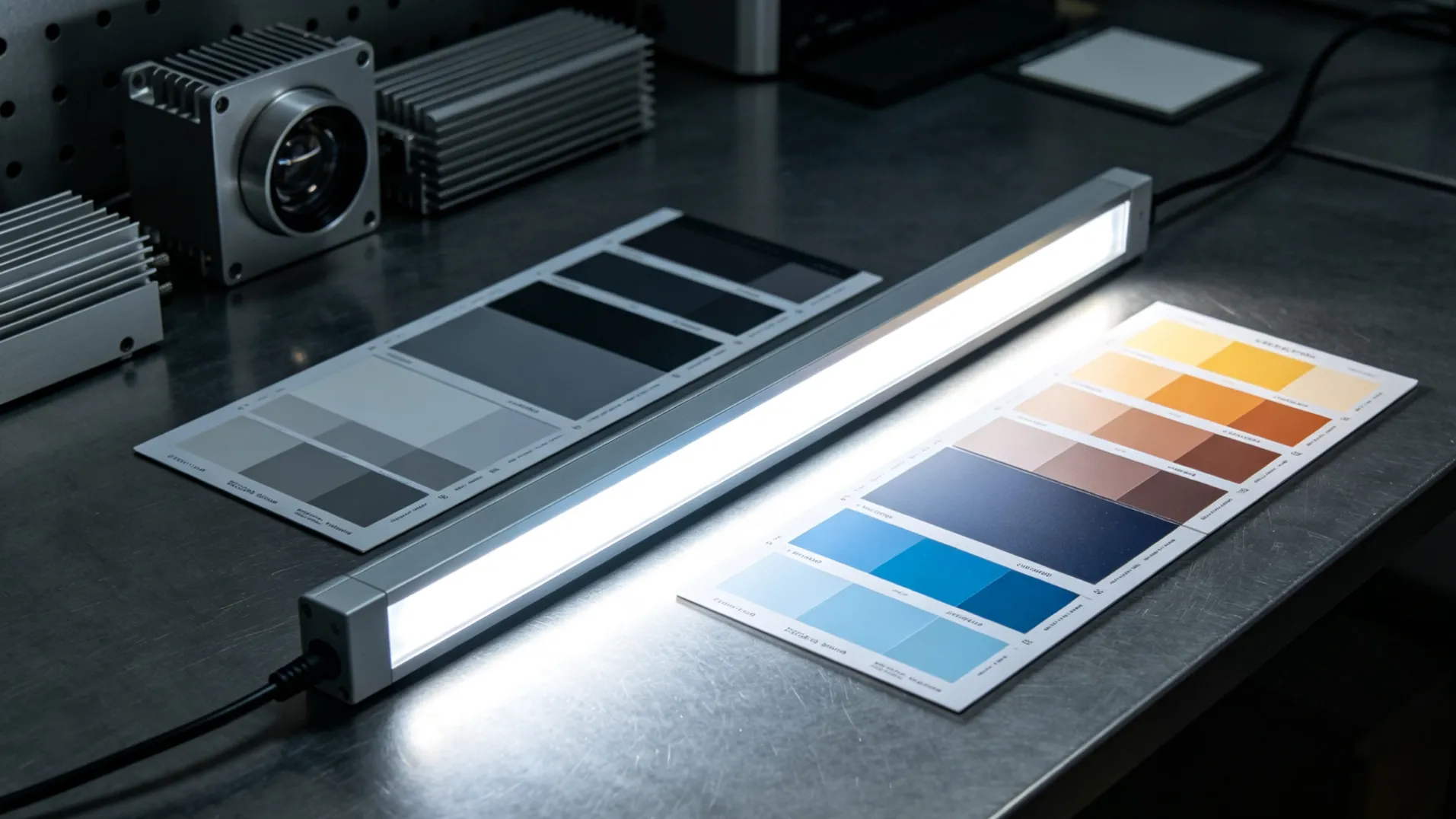
Are you also paying attention to CRI when choosing a light source? the higher the CRI, the closer it looks to natural light.
Of course, the higher the better. But if you compare the efficiency of the lighting fixtures again, you will find that the efficiency of CRI90 lighting fixtures is lower than the CRI80 lighting fixtures, so the CRI is not necessarily the higher the better. Pursuing ultra-high CRI will sacrifice the brightness and efficiency of the lighting fixtures.
So, why can't we just look at CRI?
To enhance CRI, it is necessary to increase the red light component, adjust the ratio of fluorescent powder, and broaden the spectrum. Red light has low efficiency. The more complete the spectrum and the more dispersed the energy, the lower the efficiency. Not all scenarios require high CRI, such as warehouse lighting, outdoor floodlighting, and industrial plants. Owners are more concerned about energy conservation while ensuring normal illumination. Art galleries, museums, and commercial spaces are more important for the visual effects of light conversion than energy conservation. So when choosing a light, we can't just look at CRI. Choose light sources with different parameters for different scenarios.
In this article, we will elaborate on the following aspects to help you choose the right lighting fixtures in different scenarios
1. What is CRI
2. What is efficiency
3. The relationship between CRI and efficiency
4. Reference Table for CRI Parameters in Different Scenarios
1. What is CRI
The Color Rendering Index (CRI) is an indicator developed by the International Commission on Illumination (CIE), with a numerical range of 0 to 100, used to evaluate the degree to which the color of an object appears true when illuminated by a light source. The CRI of sunlight is defined as a benchmark value of 100, with higher values indicating closer color rendering ability to natural light.
2. What is the efficiency of lighting fixtures
Efficiency is one of the important parameters for evaluating the energy efficiency of lighting fixtures. High efficiency lighting fixtures can more effectively convert electrical energy into light energy, reducing energy waste. Choosing high-efficiency lighting fixtures is one of the key measures to achieve energy-saving and emission reduction goals in lighting design.
3. The relationship between CRI and efficiency
To improve the color rendering index of lighting fixtures, manufacturers need to make targeted adjustments to the light source spectrum. There are three main ways: 1. Increase the proportion of red light spectrum. 2. Optimize the fluorescent powder ratio scheme. 3. Expand the overall emission spectrum range. However, these three characteristics directly result in performance shortcomings. The red light band itself has low luminous efficiency, and the wider the spectral range, the more dispersed the light energy distribution. So as the CRI value increases, the luminous efficiency (lm/W) of the lamp will decrease accordingly.
4.Reference Table for CRI Parameters in Different Scenarios
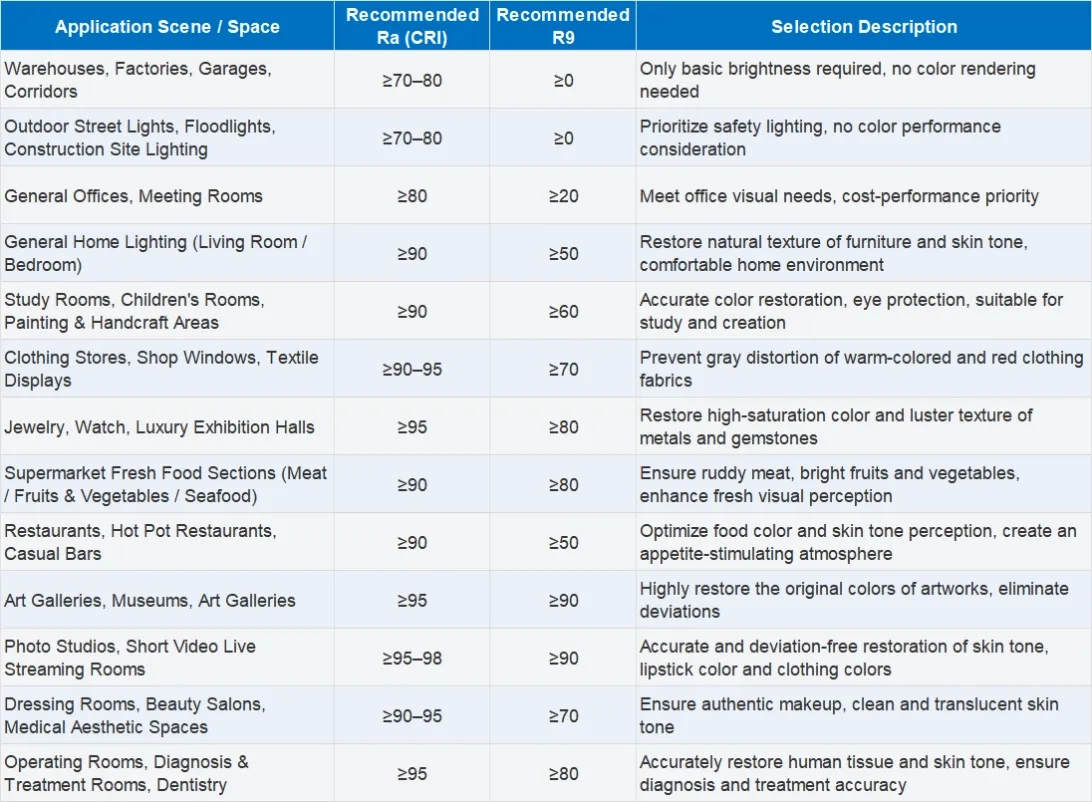
In summary, CRI is not necessarily the higher the better. Ultra high color rendering sacrifices light efficiency and brightness. A good lamp needs to balance multiple indicators such as brightness, color temperature, CRI, and energy consumption.